Episode 02
October 13, 2026
Get Lost with
Angela Hill
Nita:
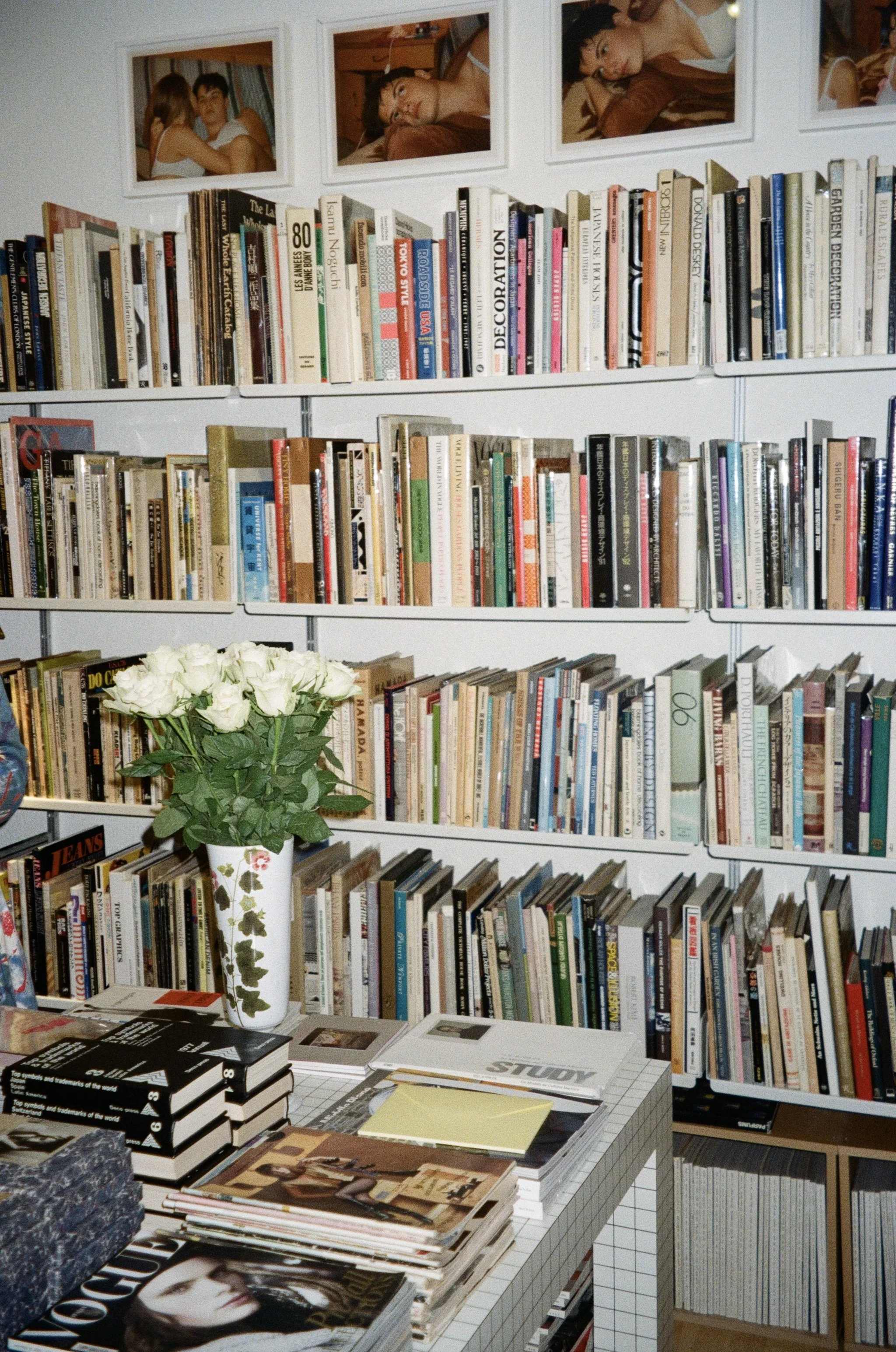
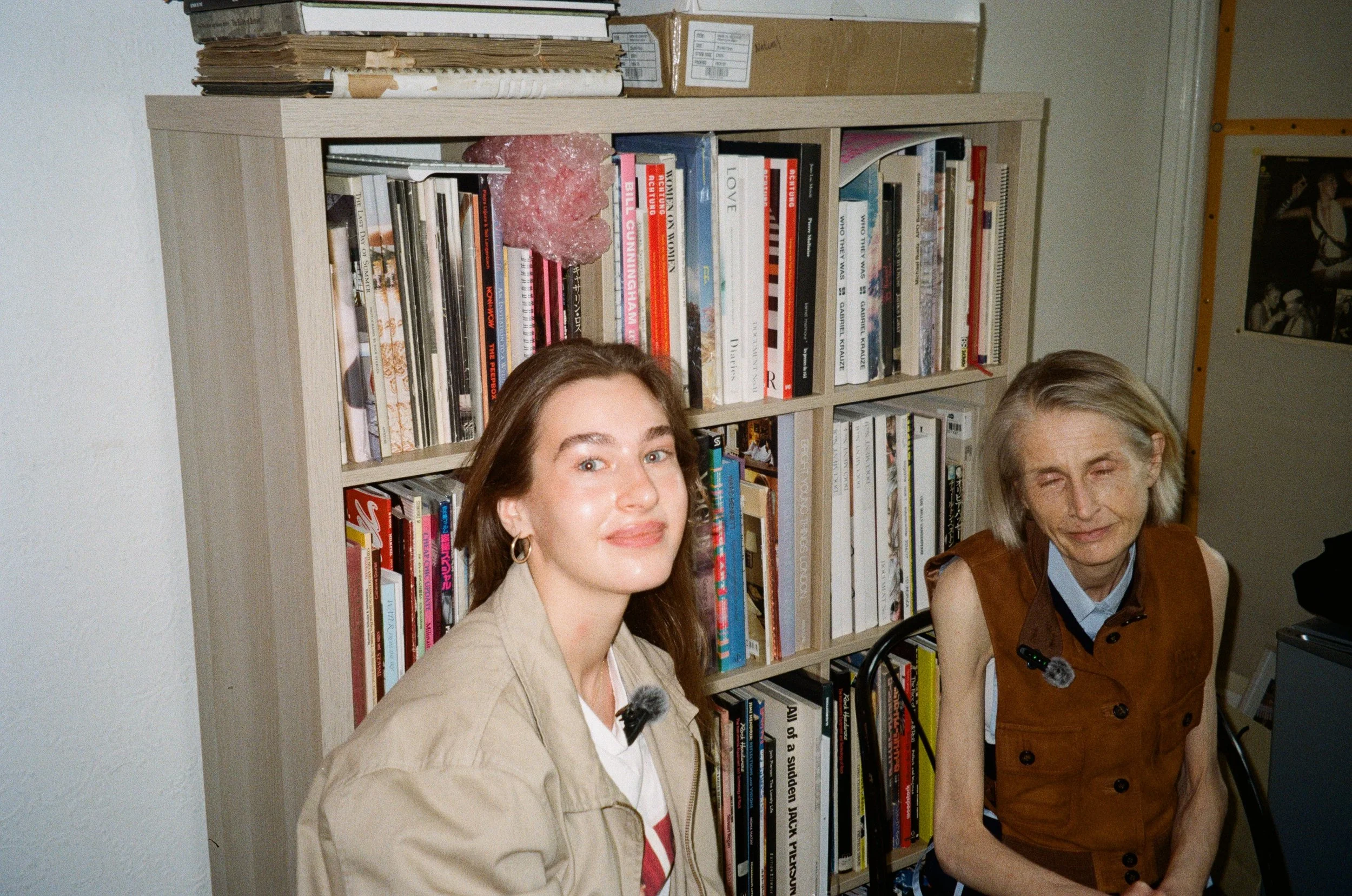
Today we’re with Angela Hill at her Soho bookshop, IDEA, which collects vintage, special and rare books. The bookstore has a perfect, chaotic-but-disciplined look; The colourful books, caps and T-shirts almost purposefully meshed together. Impeccably chosen music is playing in the background as I wait for Angela to get ready for the interview and stroll around the bookshop.
My mom also has a bookshop in Georgia called They Said Books, and she has been sourcing books from IDEA for a really long time, even before I was able to come here. For me, IDEA was always this cool place that only existed in my imagination, so it’s really nice to finally be here with you.
I want to talk more about your photography, but in connection with your bookshop. Firstly, is your approach to collecting books and curating the bookshop similar to your approach to photography?
Angela:
Only in that I know immediately when I want to buy a book, and so I don’t think about it. I just know I want it, and that I can sell it, and that it will fit in the bookshop.
Nita:
Maybe the instinct of a photographer applies to that. There’s a spontaneity and natural quality to your photography.
Angela:
Yeah. I know immediately which books I want or don’t want.
Nita:
In your first book, Sylvia, you photograph a girl from the age of 11 to 18. Tell us more about your intrigue with the theme of adolescence.
Angela:
I think because I remember it so well myself, and I’m just fascinated by seeing that in other girls. I can just remember it so clearly, my feelings at the time and how you are at the time.
Everything is very vital. You want things quickly, you want things to happen, you have big dreams and plans, but you don’t know how they’re going to happen. In one sense, everyone seems to be hemming you in. You know, you’re very much tied to mom and dad at home, but at the same time, it’s quite scary to leave mom and dad and to put that world behind you because then you’re going out into new territory.
And so I see adolescence as very much a tugging within yourself.
Nita:
Did you see any change in the way Sylvia was in front of the camera from when she was 11 to 18? Did that authenticity she had at 11 ever leave?
Angela:
Definitely not. One hundred per cent not. I know I’ll never meet anyone like Sylvia ever again.
She was so intuitive and understanding, from the very first thing I said to her right through to 18 years old, where she could just forget I was there and get on with her life. She knew that was what I wanted.
I didn’t want her to act. I didn’t want her to do anything special. I just wanted her to be with me…and she was.
Nita:
For your second book, Edith, you documented your daughter’s life. I wanted to ask about the experience of working with your daughter and, as a mother to two girls, how that affected your perspective on working with young girls.
Angela:
I’m very glad I had two daughters. It’s wonderful, but it’s really challenging.
The elder one is very much like me, and so in one way we don’t get on because we both know each other back to front. We know what each other is thinking and everything. So maybe things that annoy me about her are really things that I am annoyed about within myself as well. That’s quite an interesting relationship.
And then the younger one, who I photographed for the book, is in a lot of ways very different from me. She’s very wise, she’s very sensitive, she’s very, very similar to Sylvia in her temperament and in her sensitivity. She’s very artistic, and so she fascinates me and intrigues me. She’s like a secret to me.
But I photographed her in exactly the same way as anybody else.
Nita:
Was there any sense of rebellion from her side?
Angela:
Yeah, totally. She hated it. She hated every single photograph, and I had to pay her for every single photograph. She’d be very angry and moody when she came on the shoots.
And so, again, from her, just like with Sylvia, there’s no acting. Everything you see in the book, she is really reacting to me. She knows exactly what I want from the photograph, and she does it. She does it correctly.
A lot of the time, I’ve taken a photo where she’s going like this into the camera [Angela making an angry face], she really was feeling that. There’s nothing acted or artificial.
Nita:
I wanted to ask about your taste, which you say comes instinctively in both your photography and the bookshop. When you were younger, In what ways did you express your taste?
Angela:
A lot was through clothes. I loved fashion. I loved clothes. I still love clothes now, buying clothes, looking at clothes.
Nita:
Did your style change over time?
Angela:
It has always been pretty stable. I don’t like anything too outrageous, which, again, is like my photography.nThere’s nothing artificial. I never go to a studio. I don’t use lights. Everything’s completely raw. Like in the bookshop, too. The only factor is when I’m doing a fashion shoot. Obviously, if I’m shooting you, the stylist is going to bring along a whole load of clothes which you may not naturally wear in your life. So, in that sense, there is a bit of artificiality.
But what I often do to get around that, especially when I’m working with very young girls, because really they’re very unsure of themselves, is I’ll try and shoot in their own home so that they’re comfortable, for a start. Secondly, I’ll say, “Just put this top on, just put this sweater on. Leave your own jeans on if you like, if you’re comfortable.” And I leave a bit of them there, so they’re still there. They’ve just got a different sweater on or something.
Nita:
How do you usually find your models? With Sylvia, I know it was kind of an accident, but do you usually find them on the street? Is it usually someone you know?
Angela:
Mostly, about 75 per cent of every shoot I do is street-cast.
And then otherwise I use model agencies, like everybody else.
Nita:
So I guess instinct probably plays a lot into that as well.
Angela:
Well, yeah. You know straight away if you go past someone. Or sometimes girls come into the store.
Nita:
Is there any other art form that you’ve explored outside of photography?
Angela:
I love ceramics. I have recently explored doing ceramic studio pottery. It’s very, very calming.
Nita:
My last question for you would be: who do you think, or want, to connect with your art? When you put your work out into the world, who do you imagine connecting with it, or what intention do you put it out with?
Angela:
I don’t know if I put it out with intent. It’s a very interesting question because, when I’m shooting a photograph, I’m not thinking, “Who is going to see this?”
I’ve just done a big French handbag leather goods brand. Obviously, when I’m shooting that, the whole reason they are paying me and having me do it is because I’ve got to show their bag. In some senses, I’m thinking I’ve got to do the job that the client wants because that’s what they’ve paid for. But at the same time, I’m also thinking, “Okay, you asked me to do the job, so you want a me-type of photograph.” And you’re only going to get that if I shoot in my usual way.
So I’ll tell the model to throw the bag down on the floor, or to do with the bag what you would do if it was your bag. So you come in, you just dump it on the table, you know, and it’s full of stuff [gesturing towards my bag].
I like to kind of weave a little story around why on earth I’m doing this. We were down by the water, by the Thames, and the idea was: she’s a model, but she’s off duty. She’s not working today. So what does she pack in her big bag? A yoga mat because she’s going to a yoga lesson later. You might have your phone in there, a laptop in there, a change of clothes, a pair of old track pants or something, or a towel spilling over the edge.
Halfway through the day, maybe she wants to text a friend. So she sits down on a bench by the river and she eats a sandwich and, you know, the bag is just there.
Nita: An accessory. As it should be.